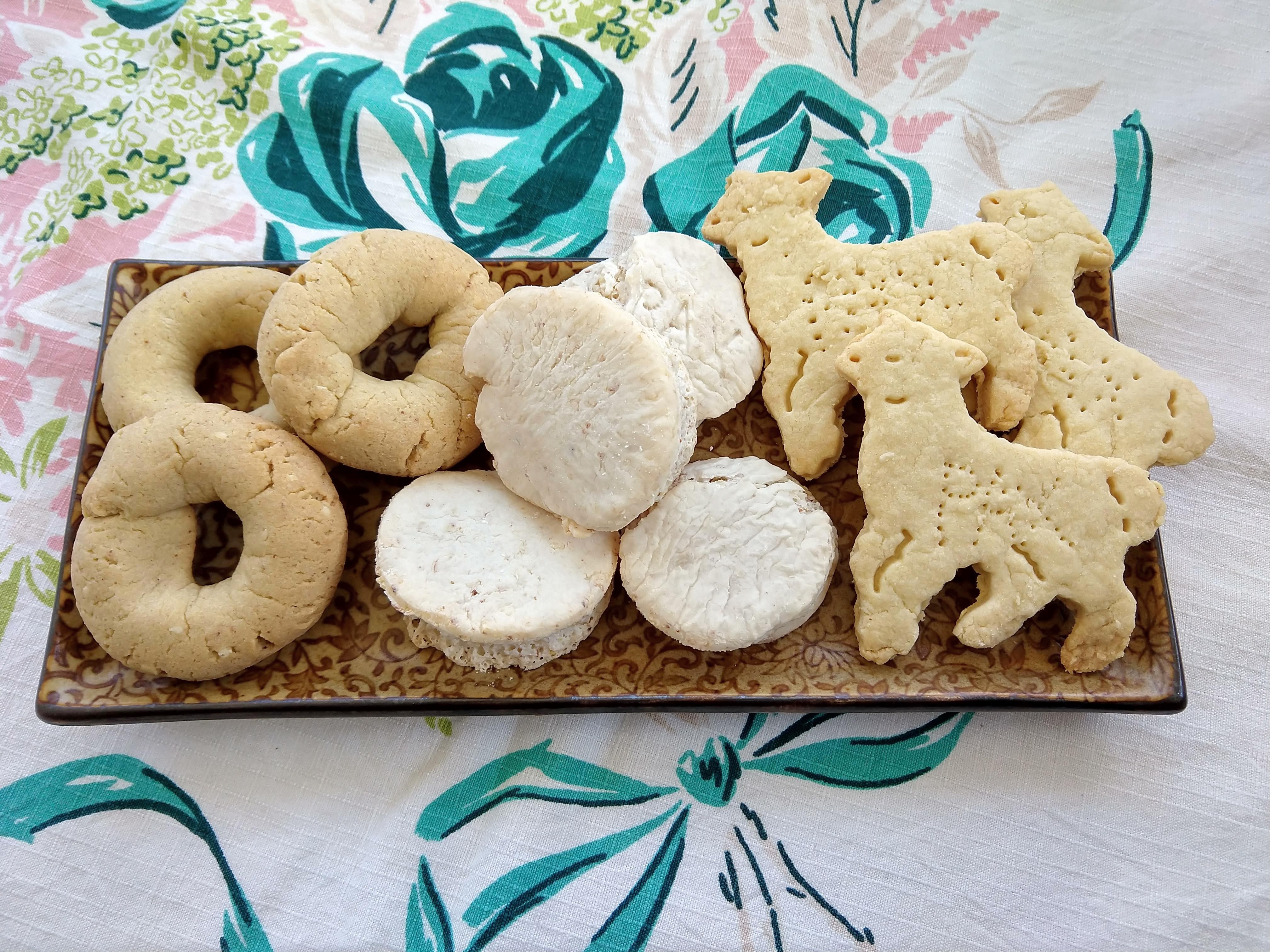
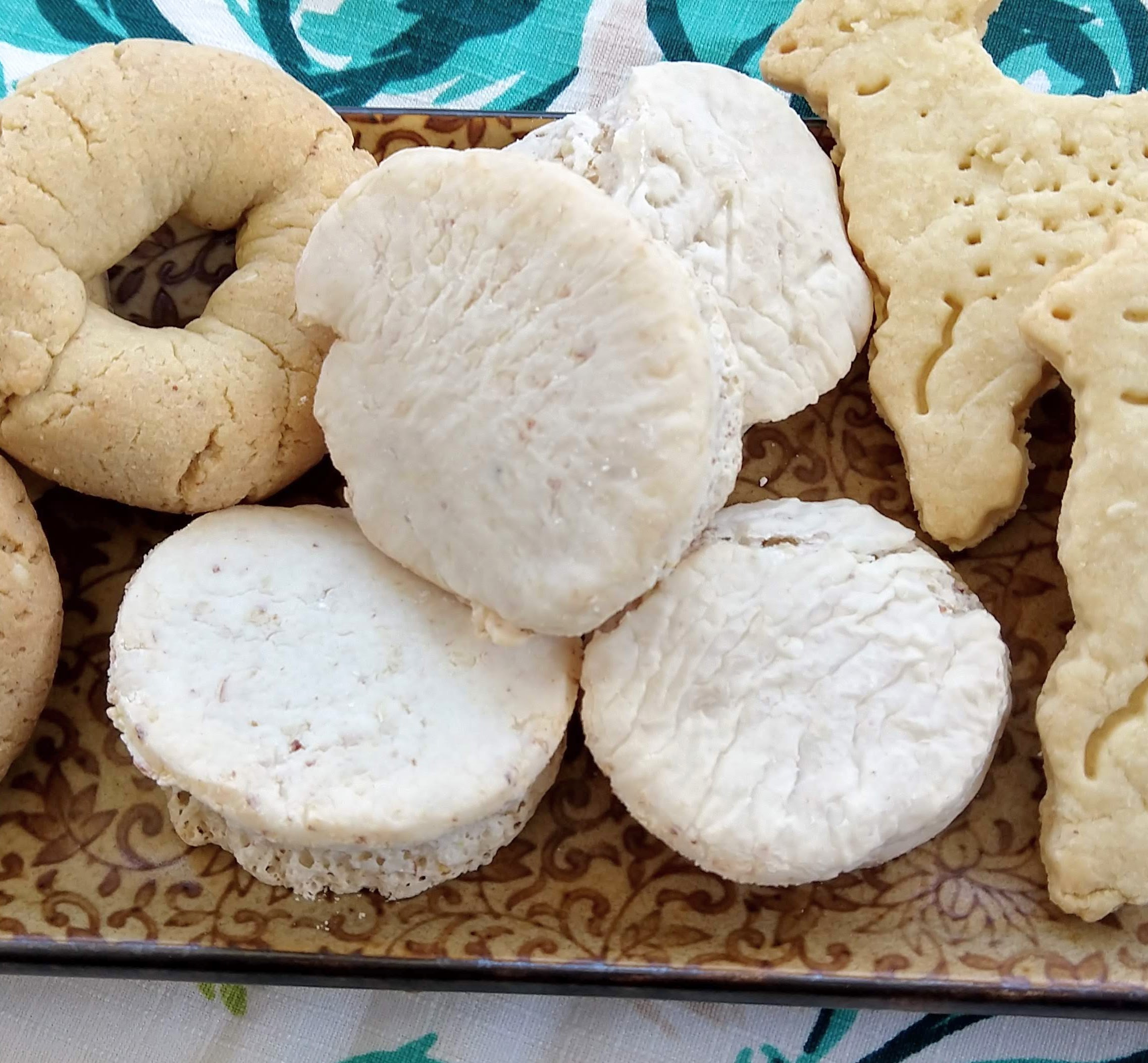
Long ago in England (and still in Hereford) clergymen would distribute “pax cakes” to their parishioners at the end of Palm Sunday services, with the words “peace and good neighborhood.” The idea was for neighbors to end disputes and quarrels before Holy Week began. Sometimes they were small fried pancake-like treats, and sometimes they were crisp biscuits with the image of a lamb pressed into the surface. Bringing friends and neighbors a gift of sweets this Palm Sunday is such a lovely idea that it’s worth resurrecting– even if you haven’t quarreled with anyone!
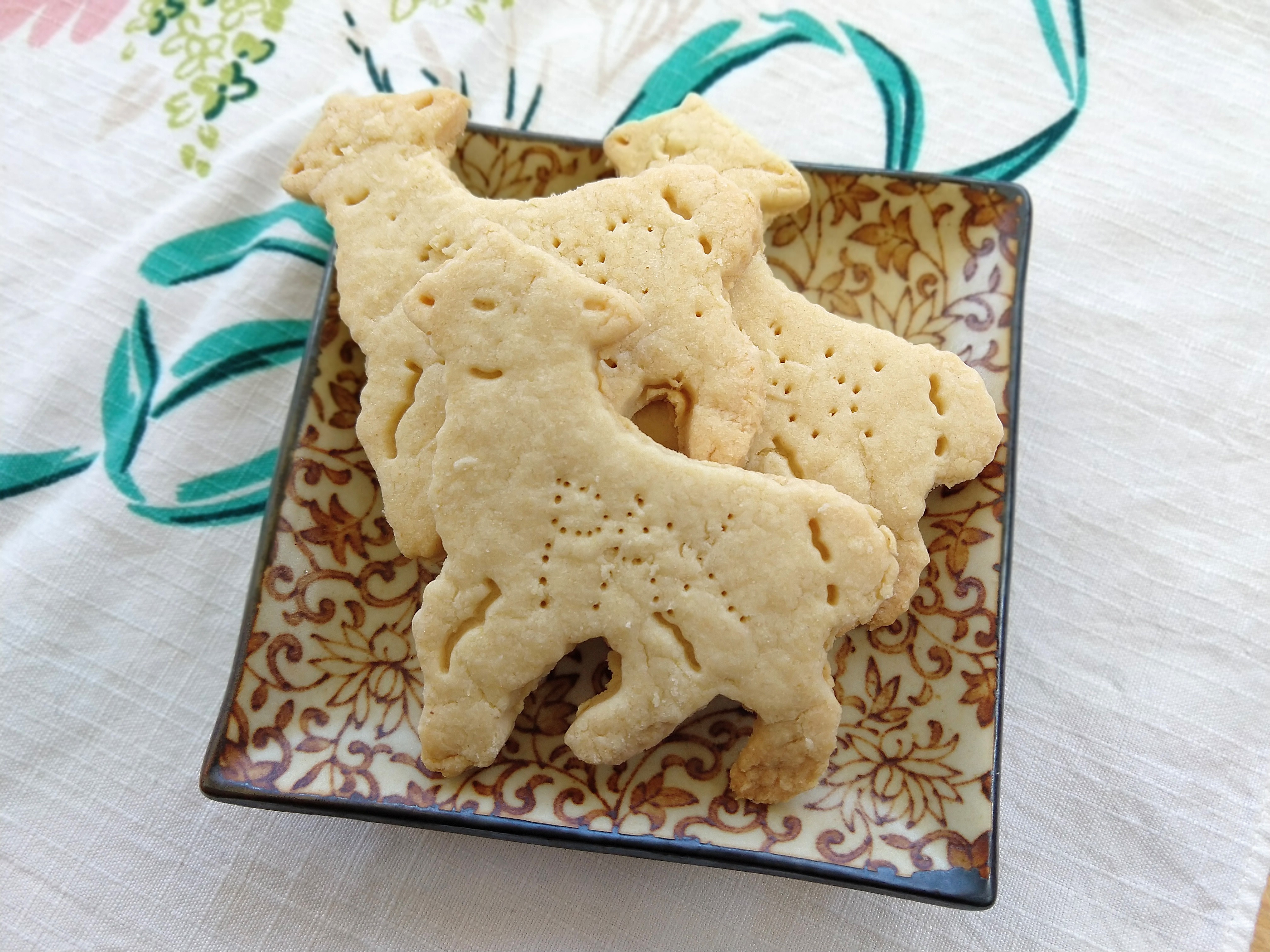
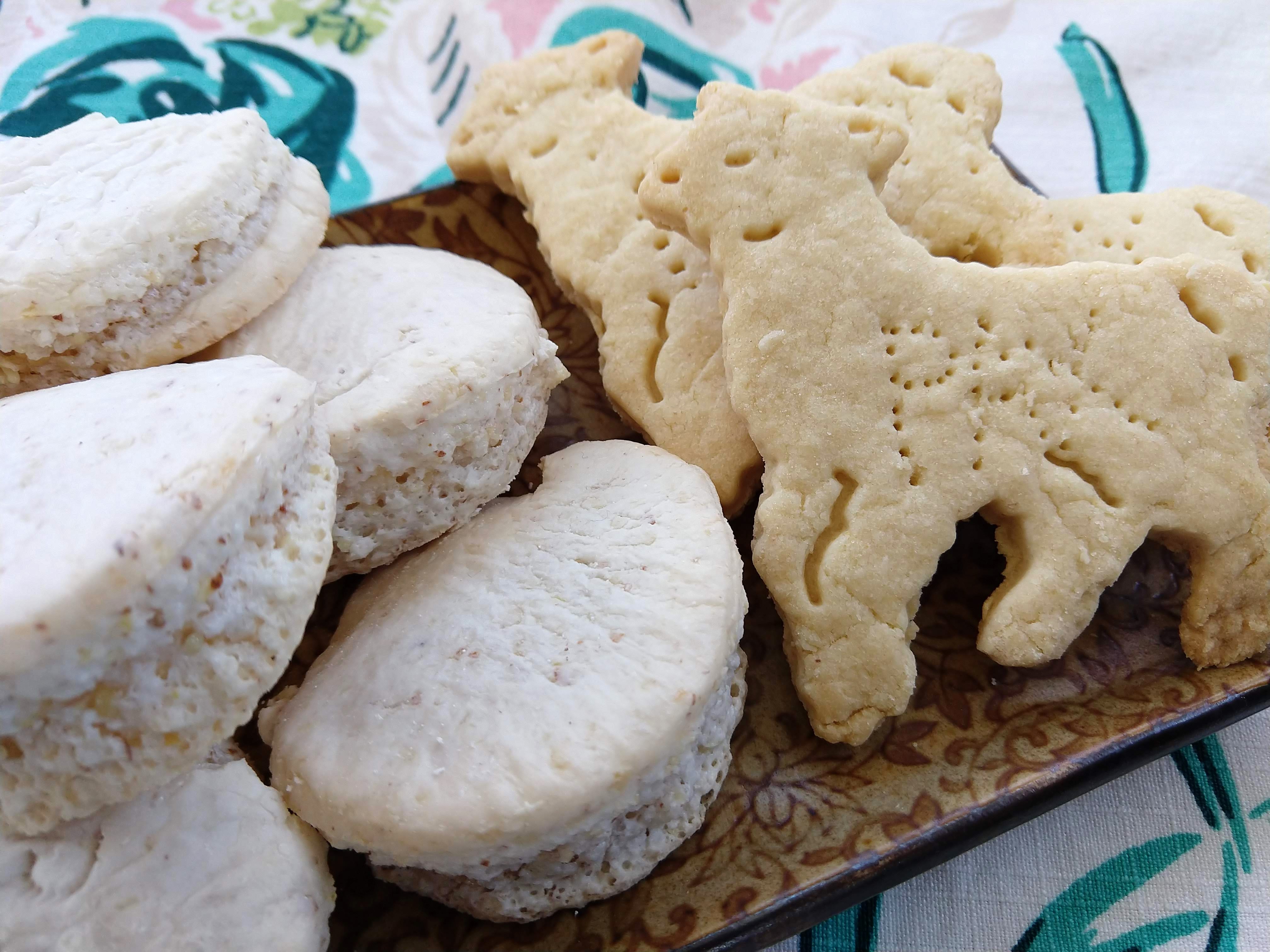
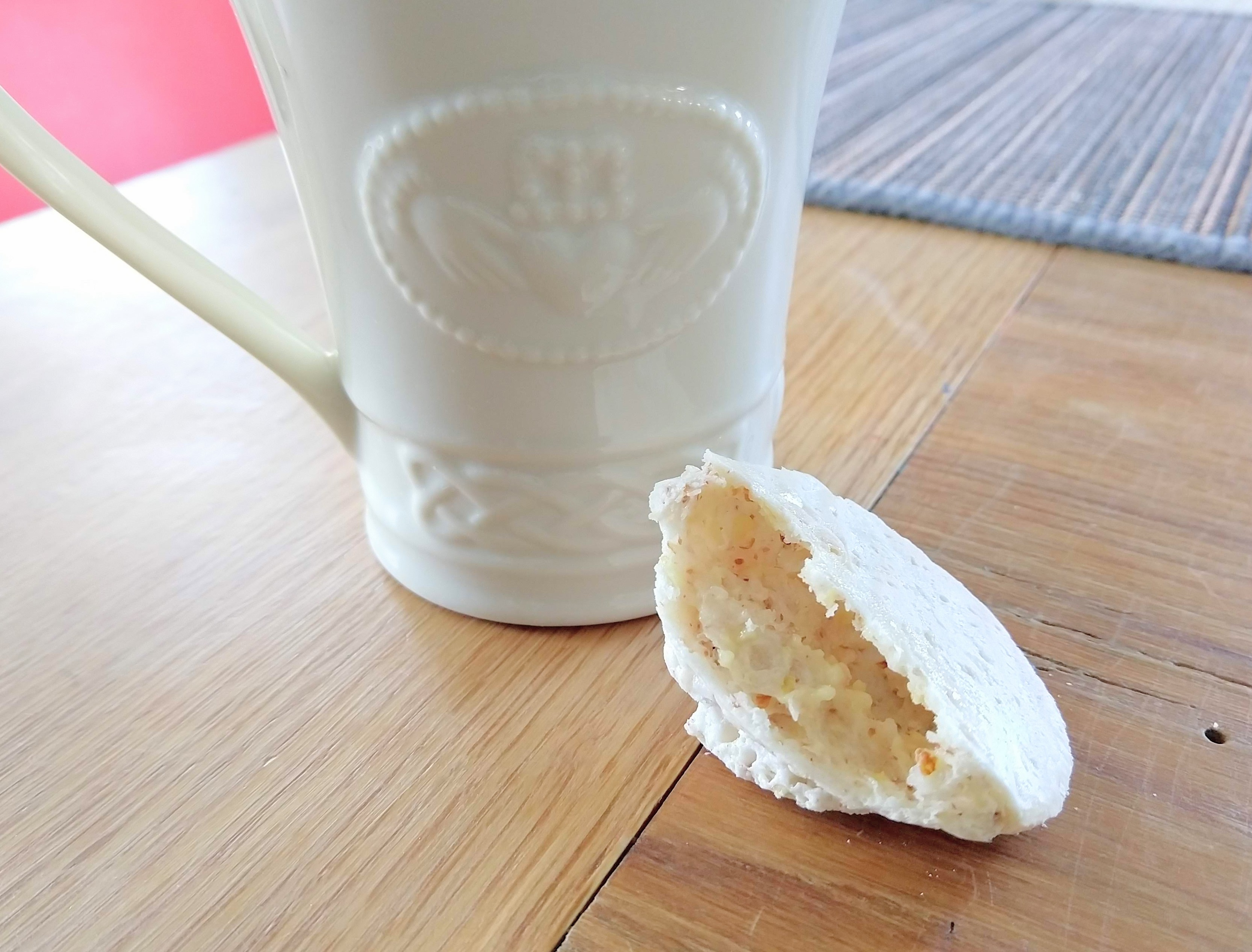
Extant recipes are hard to find for these stamped biscuits, since it’s likely that each parish had their own version. A basic shortbread can be used, either cut into the shape of a lamb with a cookie cutter, or inscribed with the work “pax” using a skewer or toothpick. I baked a few shortbread sheep, and I’ve also tried out a 17th century recipe from Mary-Anne Boermans’ book Great British Bakes : Forgotten treasures for modern bakers. These old-fashioned biscuits are somewhat ugly but truly delectable- crisp and hollow, with a lovely lemon-orange fragrance.
The second recipe I’ve included is for a Lebanese cookie called ka’ak. There are many, many versions of ka’ak throughout the near East and Arabic world, but this recipe is traditionally made for Palm Sunday and Holy Week. The texture and flavor are unique and irresistible. Expect the biscuits to be crisp, crunchy, a little crumbly, and wonderful with coffee.
17th Century Lenten Biscuits
from Mary-Anne Boermans’ book Great British Bakes : Forgotten treasures for modern bakers.
If you haven’t baked the British way, with weight rather than volume, it’s worth a try. You’ll need a kitchen scale, and a knowledge of the “tare” button. I have included volume measurements too, though they are somewhat less precise than weight.
- 170 g icing sugar (approx. 1 1/2 cups)
- 60 g ground almonds (approx. 1/2 cup)
- 1 tsp orange flower water
- zest of 1/2 a lemon
- 30 g egg white (approx. 1 white)
- 1/2 tsp tragacanth gum (optional; makes the paste easier to handle)
- 2 T icing sugar mixed with 1 T cornstarch, for rolling
- Preheat the oven to 325 degrees, and line a baking sheet with parchment.
- In a medium bowl or stand mixer bowl, combine all ingredients (except sugar & corn starch mixture). Mix well, scraping down the sides of the bowl several times to make sure the paste is thoroughly combined. Add a little more icing sugar, as needed, to make the paste firm and easier to handle.
- Tip the paste onto a surface dusted with the cornflower mixture, and knead until a smooth dough forms.
- Roll into a rectangle about a quarter inch think, and fold as if you were making puff pastry: fold into thirds, turn 90 degrees, roll, and repeat 2-3 more times.
- Roll the dough to about 1/8″ thick (use parchment if it is sticky.) Cut the biscuits using a circular cutter of your desired size.
- Lay the biscuits on the lined tray and bake for 5-6 minutes, until puffed and risen, and just starting to brown. Cool completely on a wire rack.
Lebanese Palm Sunday Cookies

by Arlette Therese Abdallah, Allrecipes.com. Adapted for size.
- 10 Tablespoons butter
- 1 cup white sugar
- 2 1/4 cups semolina flour
- 2 cups all-purpose flour
- 1 heaping teaspoon instant yeast
- 1/4 teaspoon ground cinnamon
- 1/8 teaspoon each ground nutmeg, cloves, cardamom, and allspice
- 1/4 teaspoon mahleb (may substitute ground aniseed)
- 1 Tablespoon black sesame seeds
- 1 Tablespoon rose water
- 1 Tablespoon orange flower water
- 1/4 cup warm water
- In a small saucepan, melt the butter over low heat. Stir in the sugar and water, and continue stirring until the sugar dissolves. Do not boil. Remove from heat and allow to cool slightly.
- Measure the flours into a large bowl, and add the butter mixture, yeast, spices, and sesame seeds. Stir slowly by hand or on the lowest setting of a stand mixer, about 10 minutes or until a dough forms. Cover with plastic wrap and let rest at room temperature for one hour.
- Line two baking sheets with parchment. In a small bowl, combine the flower waters. Have the warm water on hand in another small bowl. Dip your fingers first in the warm water, and then dip the dough into the flower water; knead until you have a soft and pliable dough, repeating the dipping as necessary.
- Using about 2 Tablespoons of dough per cookie, roll each piece into a rope about 6 inches long and 3/4 inch in diameter. Bring the ends together to form a circle, pressing the ends firmly together. Place the completed circles on the prepared cookie sheets.
- Let the trays of unbaked cookies rest at room temperature for four hours, or overnight in the refigerator.
- Preheat the oven to 350 degrees. Bake the cookies until golden brown, about 18-20 minutes. Cool completely on a wire rack. Cookies can be stored in an airtight container for 2 weeks.
 In Due Season